
When Floodwater Reaches Your Home and Car: Which Policy Responds?
Floodwater can affect a home and a parked car differently. Compare property and auto coverage, limits, waiting periods, and practical next steps.
Learning Center › Flood damage to a home and car
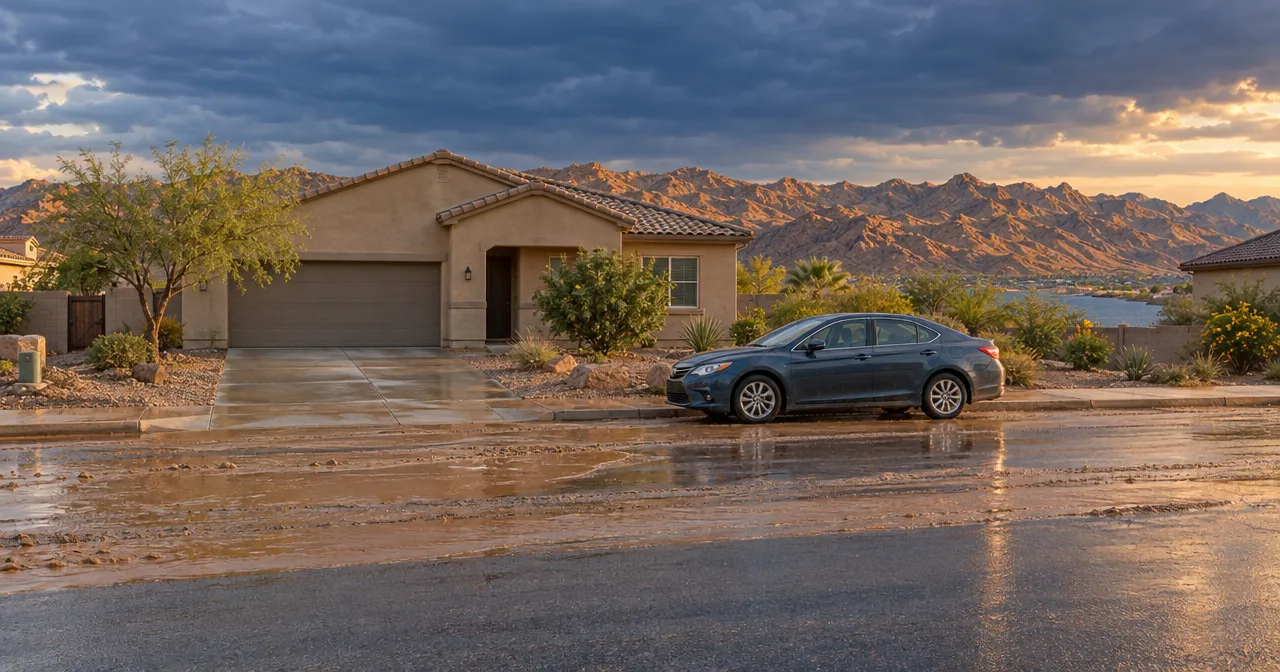
After a desert downpour, muddy water may reach the front door and a car parked a few feet away. The damage happened during the same storm, but the house and the car do not necessarily belong in the same insurance claim. The path the water took, the property that was damaged, and the coverage purchased all matter.
For households in Arizona, Nevada, and California, the useful question is not simply “Am I insured for water damage?” It is: Which water event, which property, and which policy? Here is a way to separate those questions before or after a loss.
First, trace where the water came from
Ordinary homeowners and renters policies typically exclude flooding. A flood policy is designed for qualifying flood damage, such as surface water rising and entering a building. That is different from a pipe breaking inside the home or rain entering through a damaged roof. Those other losses require a separate review of the homeowners or renters policy, including its conditions and exclusions. The National Flood Insurance Program (NFIP) explains the distinction.
Consider three examples:
- Runoff crosses the yard and enters the living room. This is the kind of event to examine under a flood policy, not to assume is included in standard homeowners coverage. The actual flood definition and policy terms still control.
- A supply line bursts under the kitchen sink. This is not automatically a “flood” just because the floor is wet. Ask how the property policy treats accidental discharge, the damaged plumbing, and the resulting damage.
- A drain backs up during a storm. The cause matters. Under the NFIP, a sewer backup is covered only if it directly results from a covered flood. A backup from a blockage may call for a different review, including whether a separate water-backup endorsement exists.
Photographs of the water line, entry point, surrounding ground, and damaged items can help explain what happened. Neither the word storm nor the amount of standing water, by itself, tells you which policy will respond.
For the home, building and belongings are separate decisions
NFIP flood insurance distinguishes building coverage from contents coverage. Building coverage concerns the structure and certain installed systems and fixtures. Contents coverage concerns eligible belongings such as furniture, clothing, and electronics. Buying one does not mean you bought the other; the coverages generally have separate deductibles. The NFIP coverage guide lists examples and current limits.
For most residential NFIP policies, the maximum available limit is $250,000 for the building and $100,000 for contents. Those are program maximums, not automatic amounts on a particular policy. Check the declarations page for the amounts actually selected. NFIP contents are generally valued at actual cash value—the value of the item at the time of damage, accounting for depreciation—rather than the price of a new replacement. Building claim valuation depends on the applicable policy requirements.
That distinction matters in a room full of everyday things. If water damages drywall, a built-in cabinet, a sofa, and a laptop, do not treat the room as a single category of property. The walls and certain installed features may be building property; the sofa and laptop may be contents. Each category has its own coverage terms and deductible, and a claim is subject to the insurer's assessment of the facts.
A renter has a different starting point. The landlord's interest in the building does not insure the renter's belongings. A renter who wants flood protection for furniture and other eligible possessions should ask about contents coverage in their own name. A condo owner should ask which parts of the building, if any, are insured through the association and what coverage is needed for the unit and personal property. Neither arrangement should be assumed from the name of the building policy alone.
Limits and exclusions can matter as much as the headline coverage
NFIP flood coverage does not ordinarily pay for temporary housing while a home is repaired. It generally excludes most cars, belongings outside the insured building, and many exterior items such as landscaping and fences. Basement coverage is particularly limited: certain installed building equipment and certain powered appliances may qualify, while many stored belongings and finished surfaces do not. A private flood policy, if available, may have different terms, limits, waiting periods, and exclusions; compare the actual forms rather than assuming they work like the NFIP.
A simple example shows why the declarations pages matter. Suppose the same qualifying flood damages flooring and wallboard, a living-room sofa, and a parked sedan. Even if all three losses happened within an hour, a household may need to review building flood coverage for the first, contents flood coverage for the second, and comprehensive auto coverage for the third. The flood policy does not become car insurance because the vehicle was parked on the driveway. Nor does having building flood coverage establish that the sofa was insured. Any payment depends on policy terms, selected limits, deductibles, and the documented loss.
For the car, look for comprehensive coverage
The NAIC's auto coverage guide identifies flood as a kind of damage generally handled by comprehensive coverage—the optional physical-damage coverage for events other than collisions. A car parked in rising water is a different question from a collision with another vehicle. Liability coverage concerns injuries or damage you cause to others; it does not repair your own flooded car. Collision coverage should not be mistaken for comprehensive flood protection.
On the auto declarations page, look for the vehicle by name or VIN and a comprehensive or “other than collision” line with its deductible. If it is absent, do not assume that the home's flood policy will fill the gap. If a vehicle is financed or leased, review the loan or lease requirements and ask how a total-loss settlement would compare with the remaining balance. Guaranteed asset protection, often called GAP, is a separate question; comprehensive coverage alone is not a promise that a loan will be paid off.
What about the laptop or bag left inside the car? Comprehensive insurance is primarily for damage to the vehicle, not a blanket policy for everything in the cabin. Ask whether any personal-property policy may apply to belongings away from home and whether its flood exclusion, deductible, or off-premises limits change the answer. Do not assume that moving an item from the house to the car changes the water peril into a covered one.
A lower-risk flood zone is not a no-risk zone
FEMA flood maps describe levels of flood hazard and help determine when a lender requires flood insurance. They do not guarantee that water cannot reach a particular lot. Drainage patterns, nearby construction, and the way runoff travels across a driveway are worth discussing even when a property is outside a mapped high-risk area. The NFIP's flood-map explanation describes how maps are used and updated.
Do not wait for a storm warning to ask about timing. An NFIP policy normally takes effect 30 days after purchase, with specific exceptions, including some mortgage transactions and certain newly mapped or wildfire-related situations. Private-policy timing must be checked separately. Ask for the effective date in writing and never assume that submitting an application immediately creates coverage. A lapse or a change to a limit also merits a timing question.
Six questions to bring to a policy review
- What water events does each policy define or exclude? Separate surface flooding from an indoor pipe break, roof leak, and drain or sewer backup. If an endorsement is listed, ask exactly what event it changes.
- Do we have both flood building and flood contents coverage? Confirm the named insured, insured address, limits, deductibles, and start date. If you rent or own a condo, clarify who insures which property.
- How will belongings be valued? Ask whether the applicable flood policy uses actual cash value or another basis, and identify any items with special limitations, especially in a basement or lower level.
- Is comprehensive listed for each vehicle we want protected? Check the deductible and verify that every relevant car appears on the auto policy. Do not use “full coverage” as a substitute for reading the coverage lines.
- What costs remain outside these policies? Temporary housing, an auto-loan shortfall, exterior property, and a deductible can create very different out-of-pocket questions. Ask about each rather than assuming one policy handles all of them.
- Who should we contact first after a loss? Save the flood and auto claims contact information and know where to find the policy numbers. Keep a basic home inventory, photographs, and vehicle information somewhere accessible if the home cannot be entered.
J.W. Thompson Insurance Agency can help families compare the questions raised by their home and auto policies in plain language. A discussion is not a determination of coverage: the policy and the facts of a particular claim decide that.
If water has already reached the property
Safety comes before documentation. Do not drive through a flooded road or move a vehicle through water to try to protect it. The National Weather Service's flood-road guidance warns that the depth and condition of a submerged road may be impossible to judge. Stay out of a damaged building if there may be electrical or structural hazards, and follow local emergency directions.
Once it is safe, make separate records for the building, belongings, and vehicle. Photograph the water line and damaged areas before cleanup; list damaged items and, where possible, their make, model, and serial numbers. Report possible claims promptly to the appropriate insurer and ask what documentation, inspection, and emergency mitigation steps it expects. The NFIP's flood-claim checklist recommends documenting damaged property and coordinating the process with the provider and adjuster. Keep receipts and a record of conversations. Do not discard damaged material before documenting it, except where health or safety requires prompt disposal; ask the insurer how to handle samples and repairs.
The central distinction is straightforward even when the outcome is not: surface water affecting a home, the home's contents, and a car are three related but separate coverage questions. Pulling the declarations pages together before the next storm makes those questions much easier to ask. Start a conversation if you want help reviewing what your own policies actually say.
Coverage note: This article is general education, not a coverage determination, legal advice, or a promise of payment. Terms, exclusions, deductibles, effective dates, and the circumstances of a loss control; NFIP and private flood policies may differ.